The thing that keeps slipping down the engineering queue is usually a few days of work.
This isn't a list of skills. These are screens from systems that are running, with pointers to the part that explains why they matter.
A team knows what it's working on, but nobody can answer what deserves to be worked on next — or when.
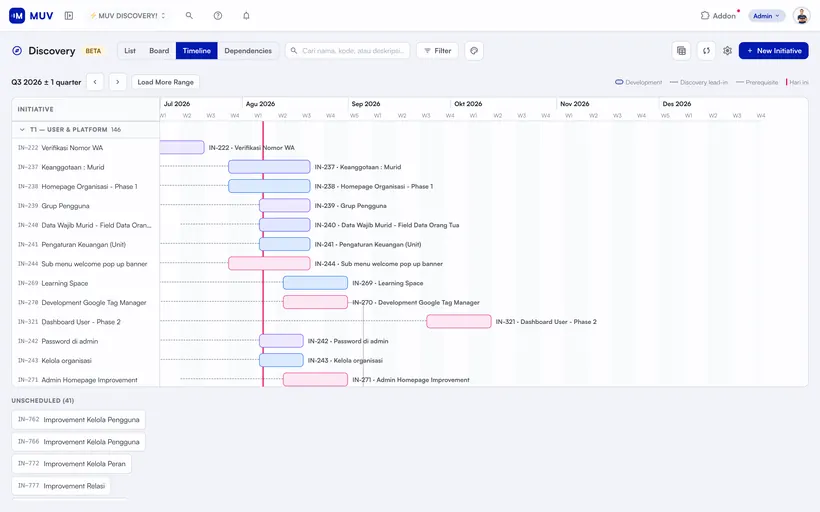
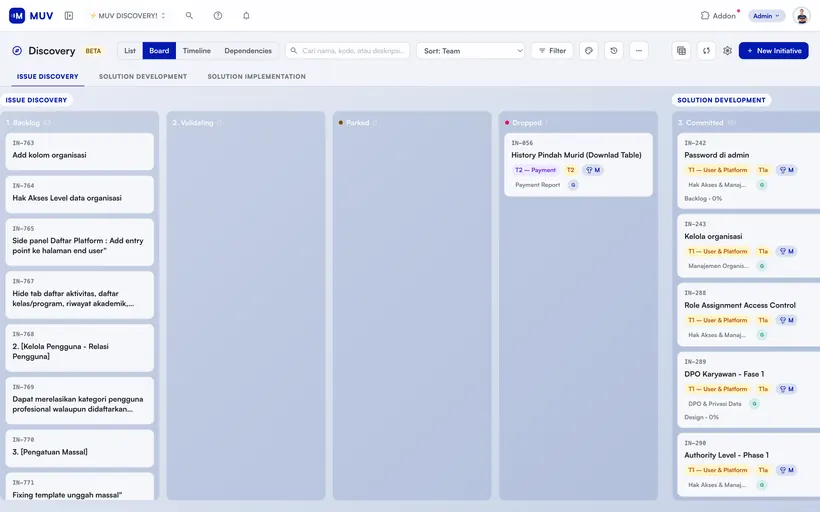
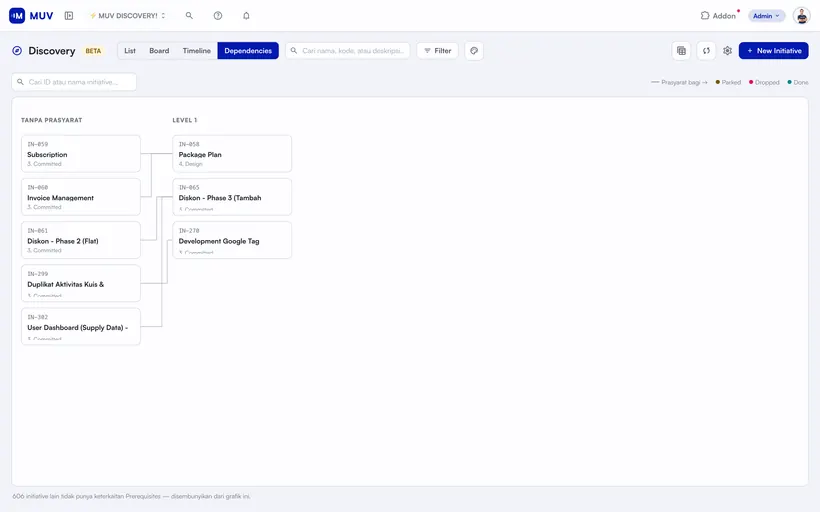
Trello and ClickUp handle decided work tidily. What they lack is the stage before: weighing initiatives, placing them in time, and seeing which one is holding another hostage. This was built to close that gap, and then the team actually moved onto it.
- Replaced
- Trello and ClickUp for a product team
- Scale
- 67-model schema · 614 initiatives · 3 tribes
- Built with
- Next.js, Prisma, PostgreSQL, Docker
- Operations
- Resource limits, recorded migrations, verified backup restore
The research finishes, the transcripts pile up, and nothing changes — because nobody had time to turn them into a list of work.
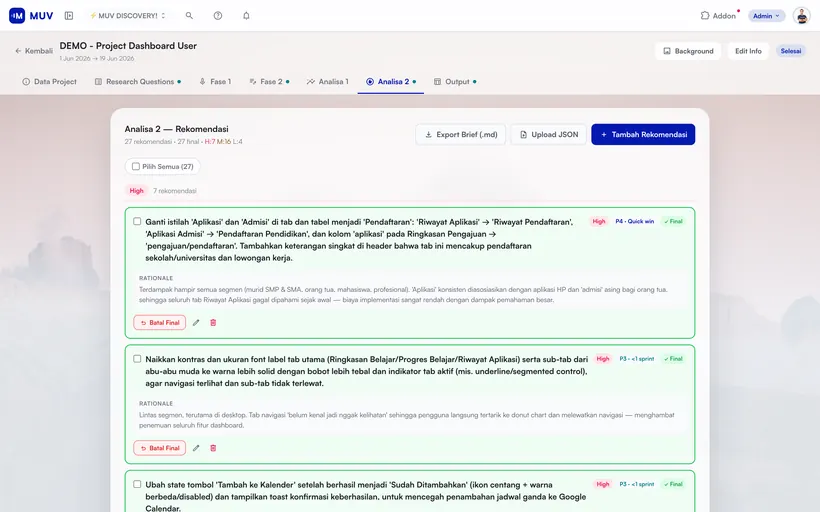
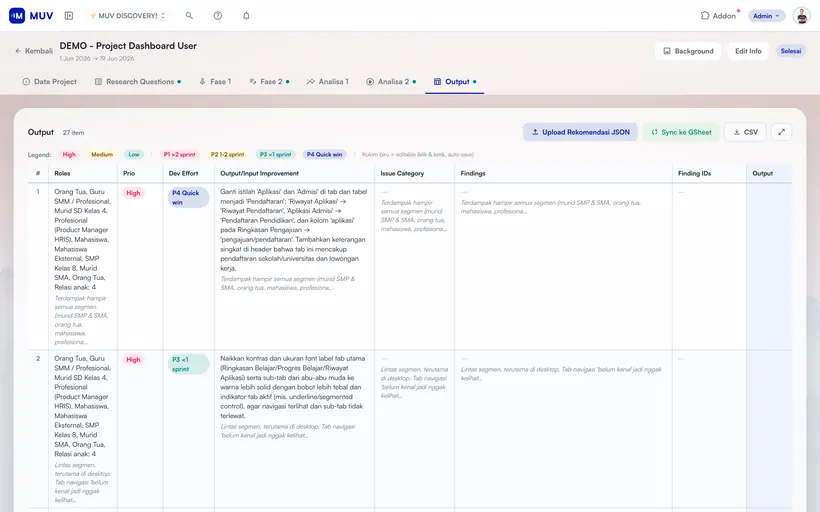
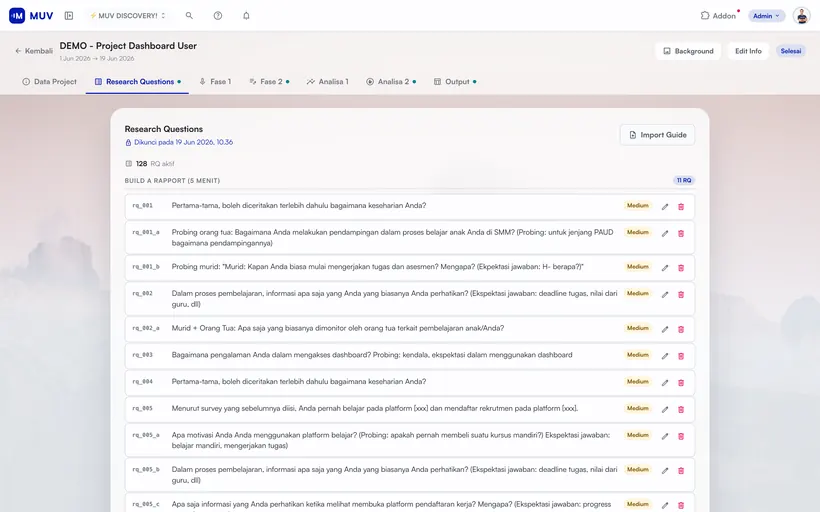
Research questions are set out first, interviews come in, and prioritised recommendations come out — each carrying its reasoning, the segments it affects, and a sense of how big the job is. It ends not in a report but in a table you can hand to engineering.
- Replaced
- Transcripts that settle and decks nobody acts on
- One project
- 128 research questions · 11 participants · 27 final recommendations
- Built with
- Next.js, an AI model for synthesis, GSheet and CSV export
- Final form
- A handover table, not a narrative document
Every receipt that has to be retyped is work nobody budgeted for, and it still eats somebody's afternoon.
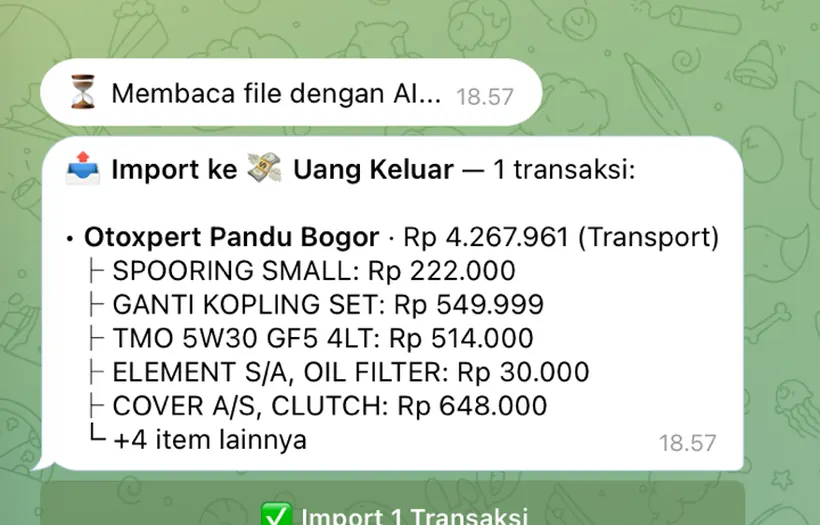
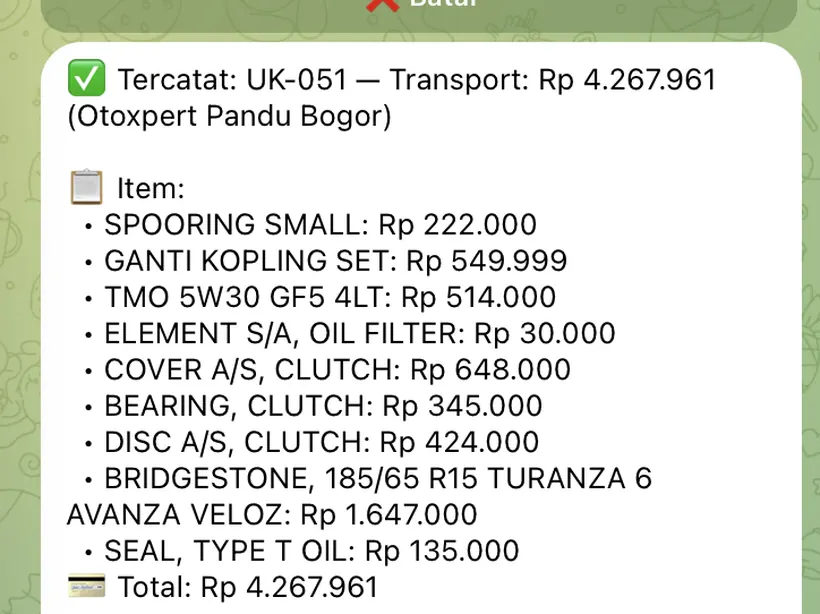
A photo of a receipt goes to the bot. What comes back isn't just the total — it's every line item, its price, its category, then straight into the record. A workshop receipt with nine jobs on it reads through completely, long messy part names and all.
- Replaced
- Retyping receipts into a spreadsheet
- Reads
- Photos as they are — tilted, creased, poor light
- Built with
- Telegram Bot API, an AI vision model, SQLite
- Safeguard
- Always asks for confirmation before recording
A good dashboard only helps if someone opens it. Most teams don't — they're in a group chat.
Four bots, four business lines. Three report and answer questions from real data; one can change things. What makes them trustworthy isn't their cleverness — it's the habit of naming what they cannot answer.
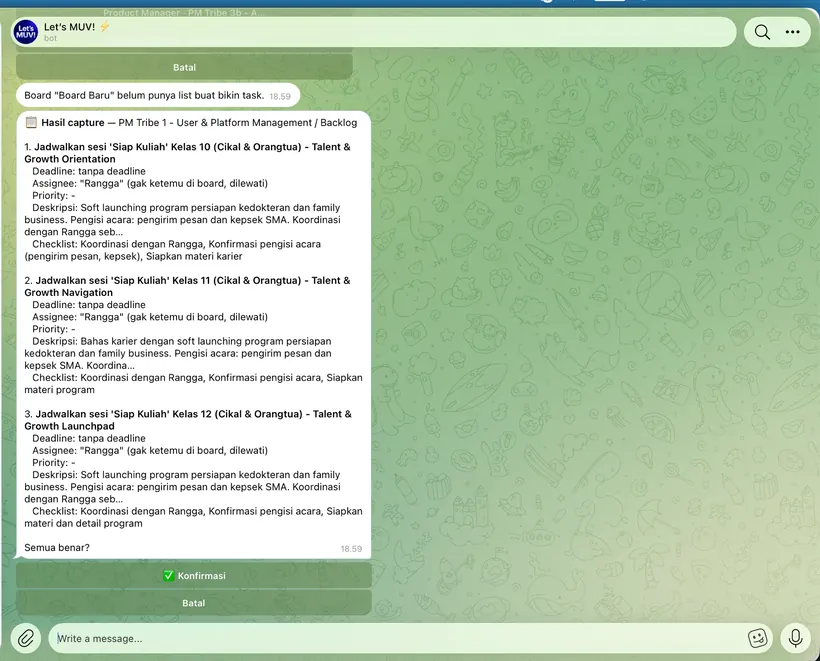
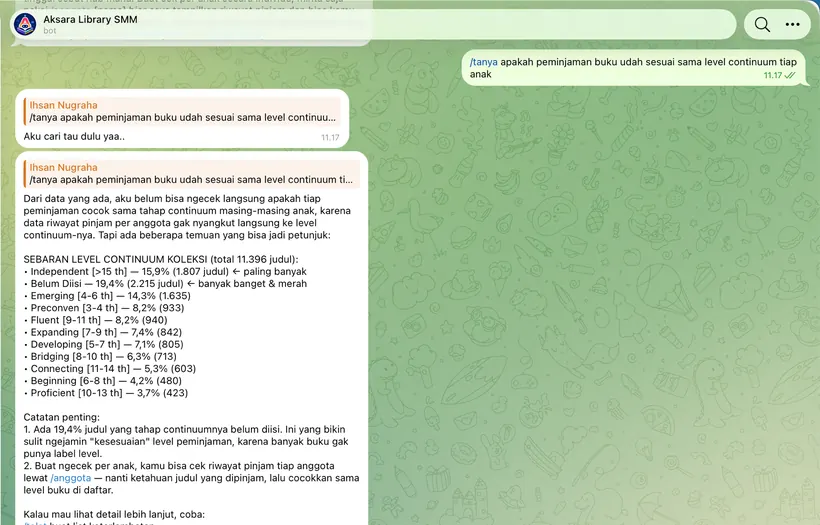
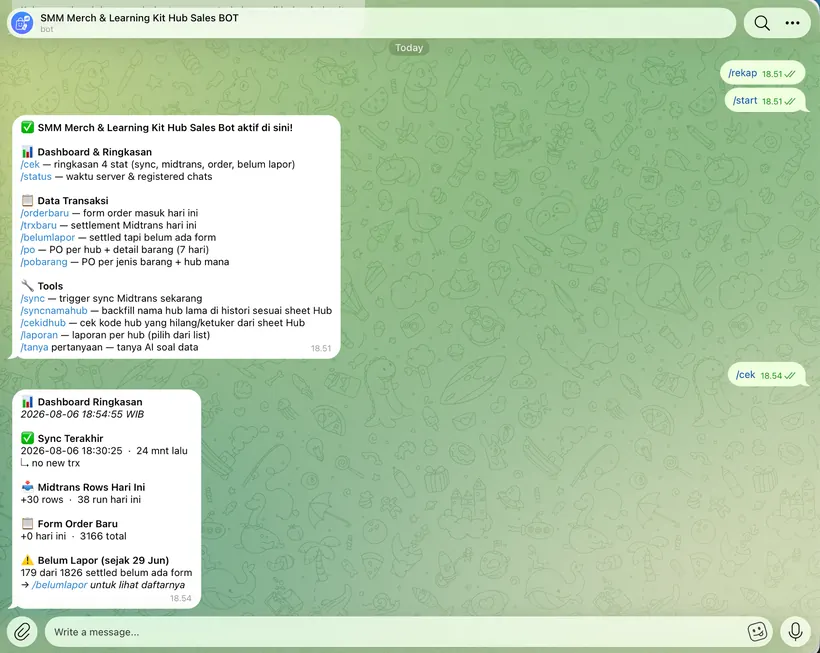
- Replaced
- Manual recaps and the same questions asked again in chat
- Covers
- Canteen transactions, merchandise, library, and work management
- Built with
- Telegram Bot API, Midtrans, Google Sheets, AI models
- A deliberate limit
- Three of them only read data — they cannot change anything
Prototypes live in chat, then vanish. Six months later nobody knows which version was agreed, or who made it.
One place for the team's prototypes: grouped by tribe, versioned, linked to their PRD and Figma, and openable by stakeholders without having to ask. What used to be a chat attachment becomes a reference.
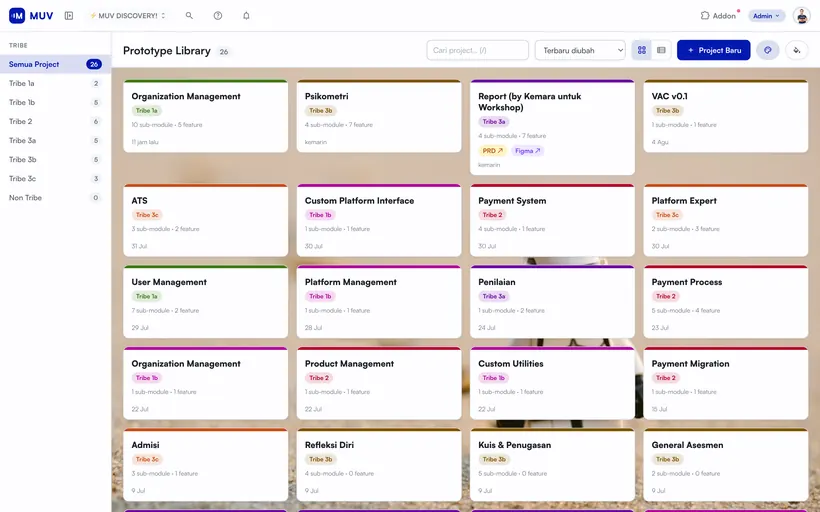
- Replaced
- Prototypes lost in chat history
- Holds
- 26 projects · grouped across 6 tribes · versioned per upload
- Built with
- Next.js, HTML storage, inside the same workspace
- Linked to
- The PRD, the Figma, and the research behind it
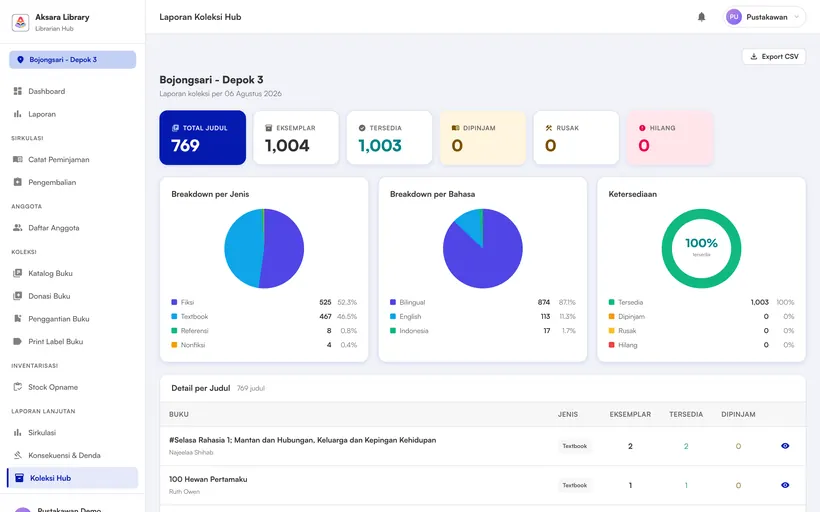
Fifty-six branches each record things their own way, and nobody can answer the simplest question without collecting files first.
One library system across every school hub, with separation enforced in the data layer rather than as a display filter. The reports aren't an afterthought; they're the reason the system exists.

- Replaced
- A separate spreadsheet per branch, and paper records
- Scale
- 62 hubs · 11,407 titles · 46,642 copies · 6,124 members
- Built with
- Laravel, PostgreSQL, Docker, multi-tenant
- Migration
- 11,212 bibliography records and 44,909 items moved from legacy data
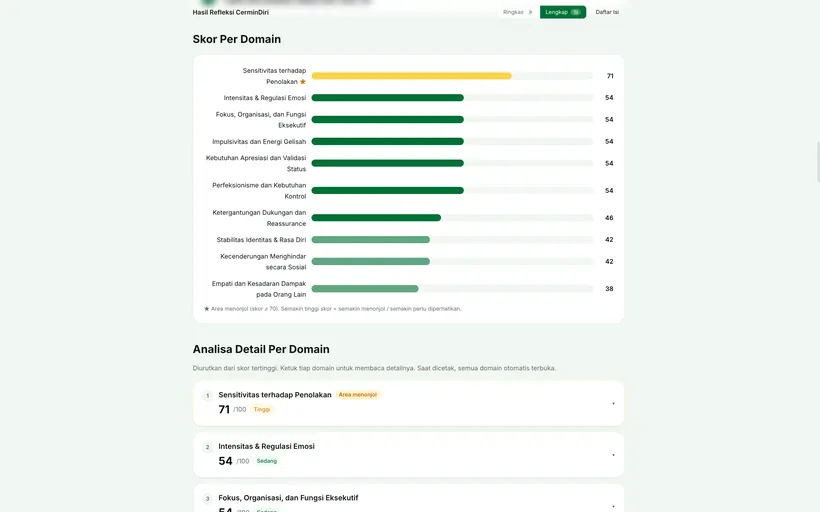
Collecting answers is easy. Turning them into something worth reading for the person who answered — that's what rarely gets finished.
Sixty statements become a ten-domain narrative report, with prominent areas flagged and a reading for each domain. Exportable to PDF. It all runs in the browser — no answer is sent anywhere.

- Replaced
- Questionnaires that end up as spreadsheet rows
- Contains
- 60 statements · 10 domains · short and full report
- Built with
- React, client-side scoring, PDF export
- Privacy
- Answers never leave the device
The rest
There are around eighty other things built and running — internal tools, bots, dashboards, mobile apps. This page carries only the ones that explain the most.
For your IT team
Servers, databases, security, deployment, backups, and source-code ownership — answered directly, including where this way of working is the wrong choice.